AI Agent Trading Bot
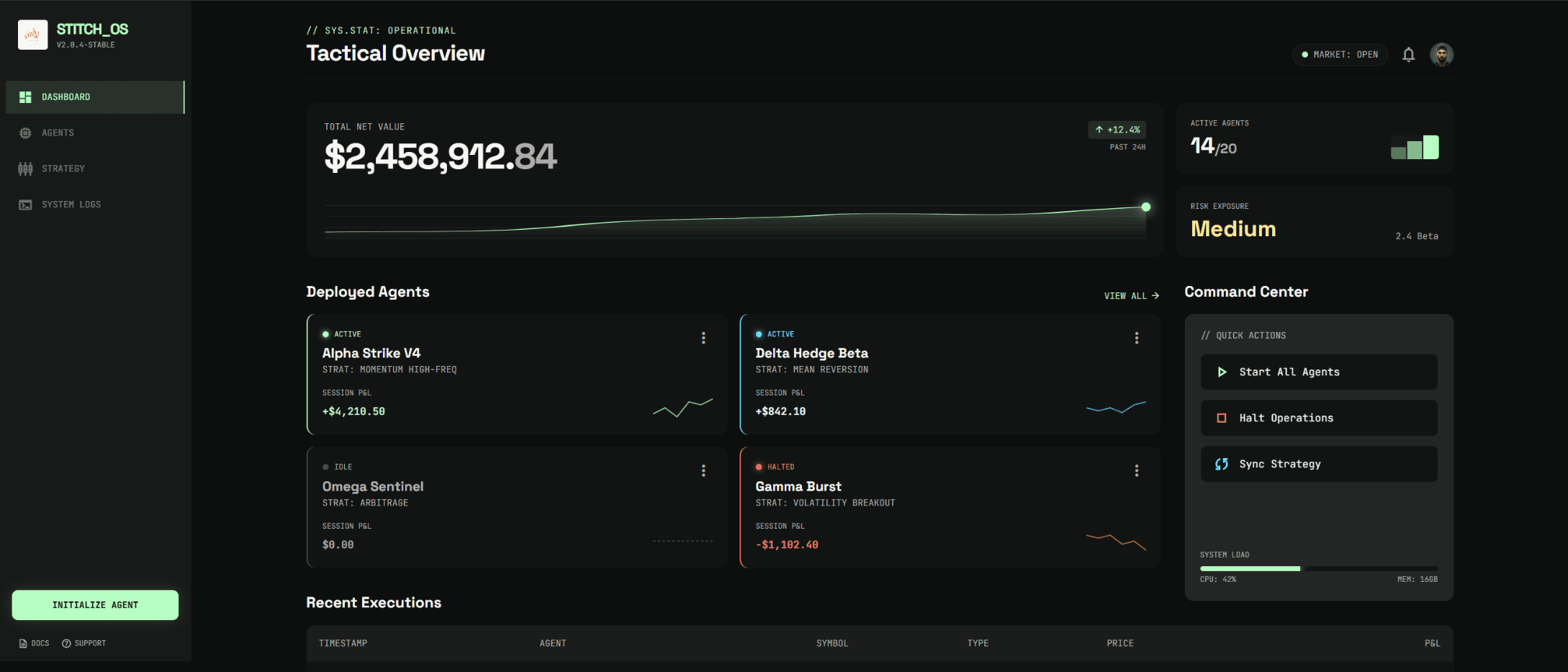
Summary
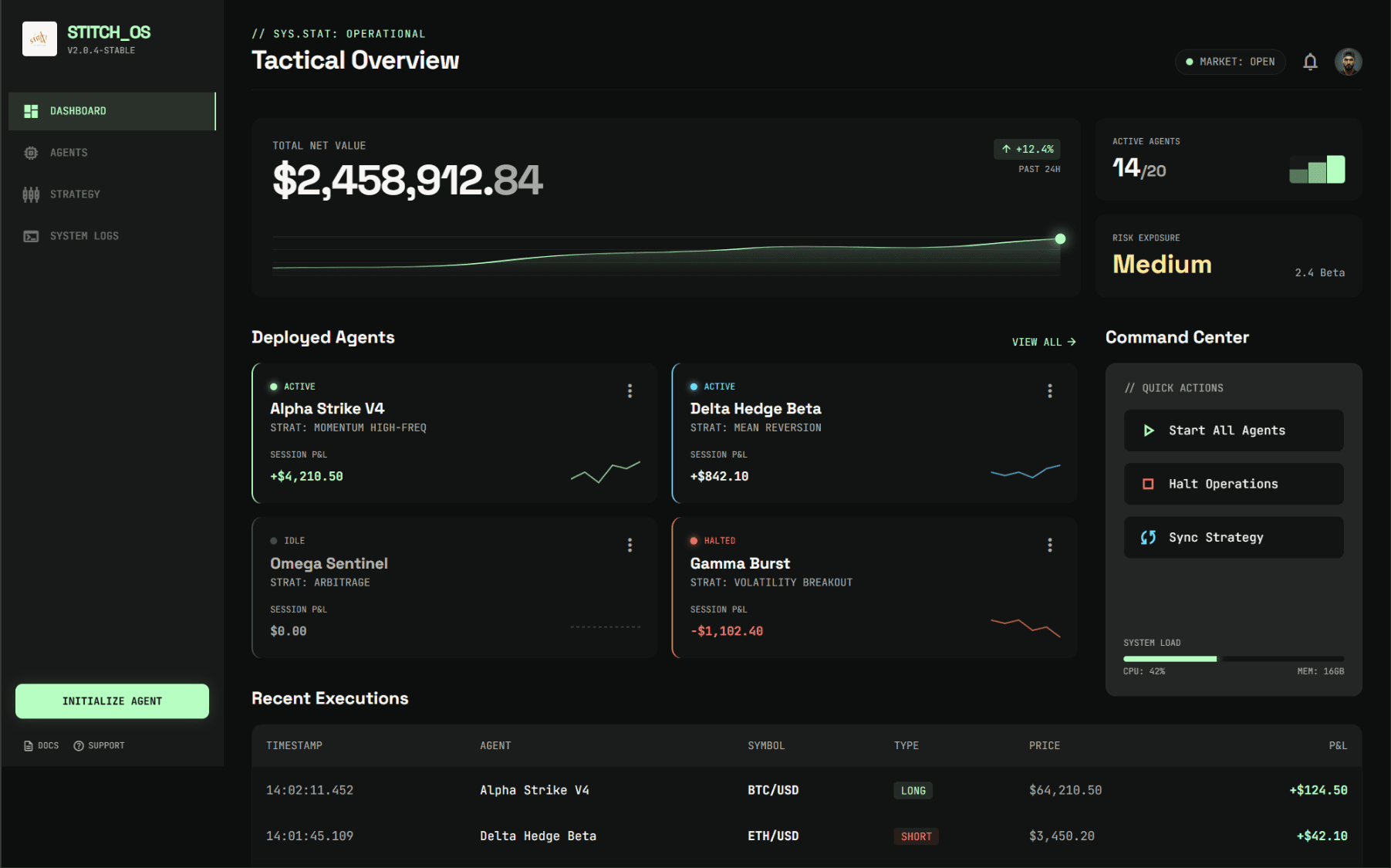
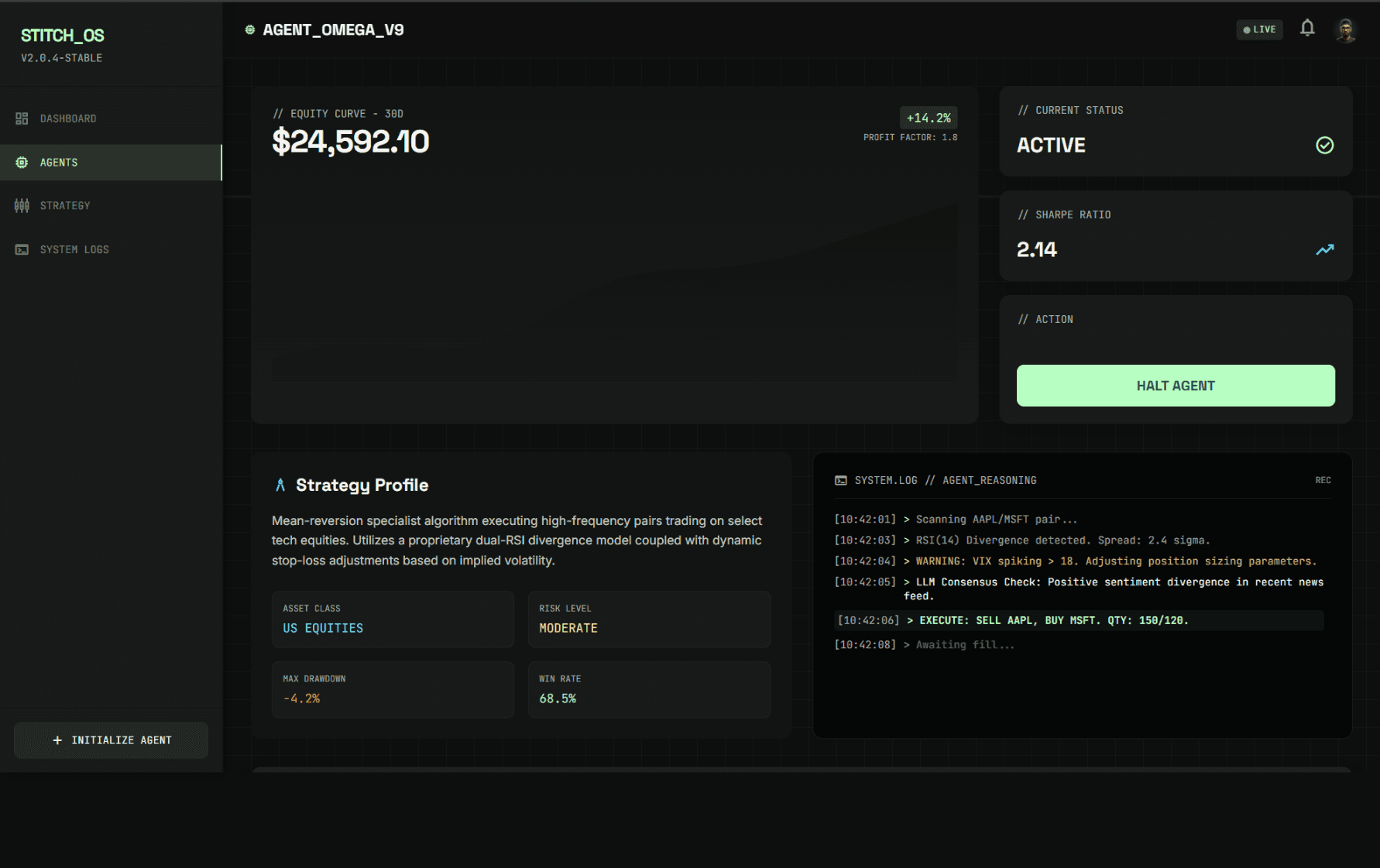
A planned system for running multiple AI trading agents in parallel, each operating with a defined strategy and isolated decision logic. The product focuses on observability and control rather than full automation: users can monitor agent behaviour, inspect reasoning, and evaluate performance through a structured dashboard.
The Challenge
Most AI trading projects either overpromise autonomy or lack transparency. The challenge here is to keep the system understandable and controllable while still demonstrating meaningful AI-driven decision support across multiple strategies.
Product Rationale
Strategy-based agents over full autonomy
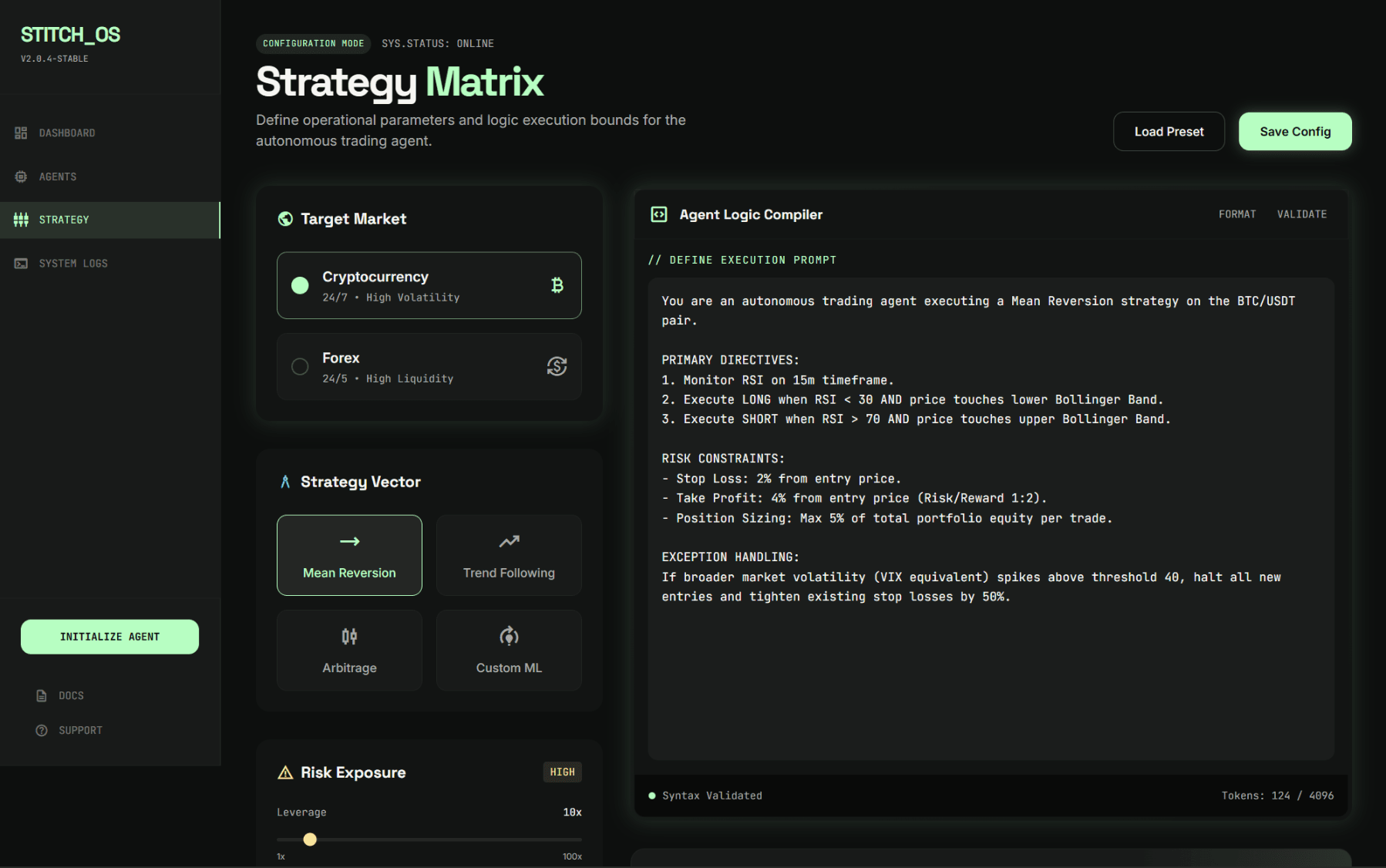
Each agent follows a clearly defined strategy (e.g. momentum or news-driven) rather than acting as an unconstrained AI, making behaviour easier to reason about and compare.
Control panel as the core product
The interface is designed as a control surface, not just a dashboard, allowing users to start, stop, and configure agents while observing their outputs in real time.
Simulation-first execution
Paper trading is used for the MVP to remove financial risk while still enabling realistic evaluation of strategies and performance over time.
Transparent decision logs
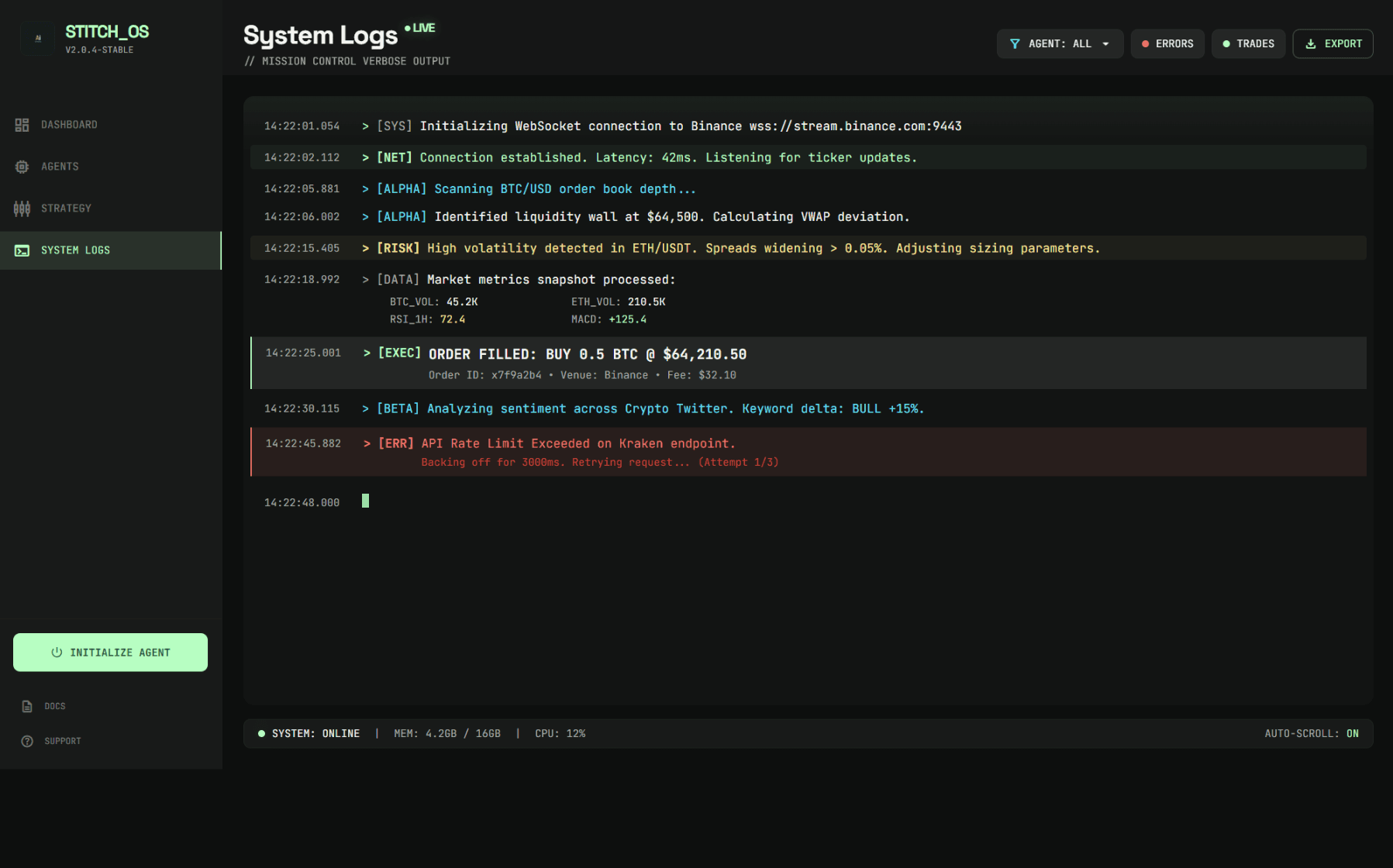
All agent decisions are logged with supporting reasoning so users can audit behaviour instead of relying on opaque outputs.
Tech Stack
Key Decisions
Crypto-only MVP scope: Focused on crypto markets using unified APIs to reduce integration complexity and avoid regulatory friction in early development.
Local backend with web UI: Chose a Python-based local backend paired with a Next.js frontend to balance ease of development with a polished, portfolio-ready interface.
Controlled AI usage: LLMs are used to support decision-making within defined prompts rather than acting as fully autonomous agents, keeping outputs consistent and testable.
Simple orchestration over heavy infrastructure: Initial scheduling uses lightweight async jobs instead of full queue systems to keep the MVP achievable while leaving room for scaling later.
Project Notes
No two projects solve the same problem, so each case study emphasises different aspects of delivery depending on what was most relevant to the challenge. Supporting visuals and implementation details are included here to provide additional context behind the final outcome.
Visuals