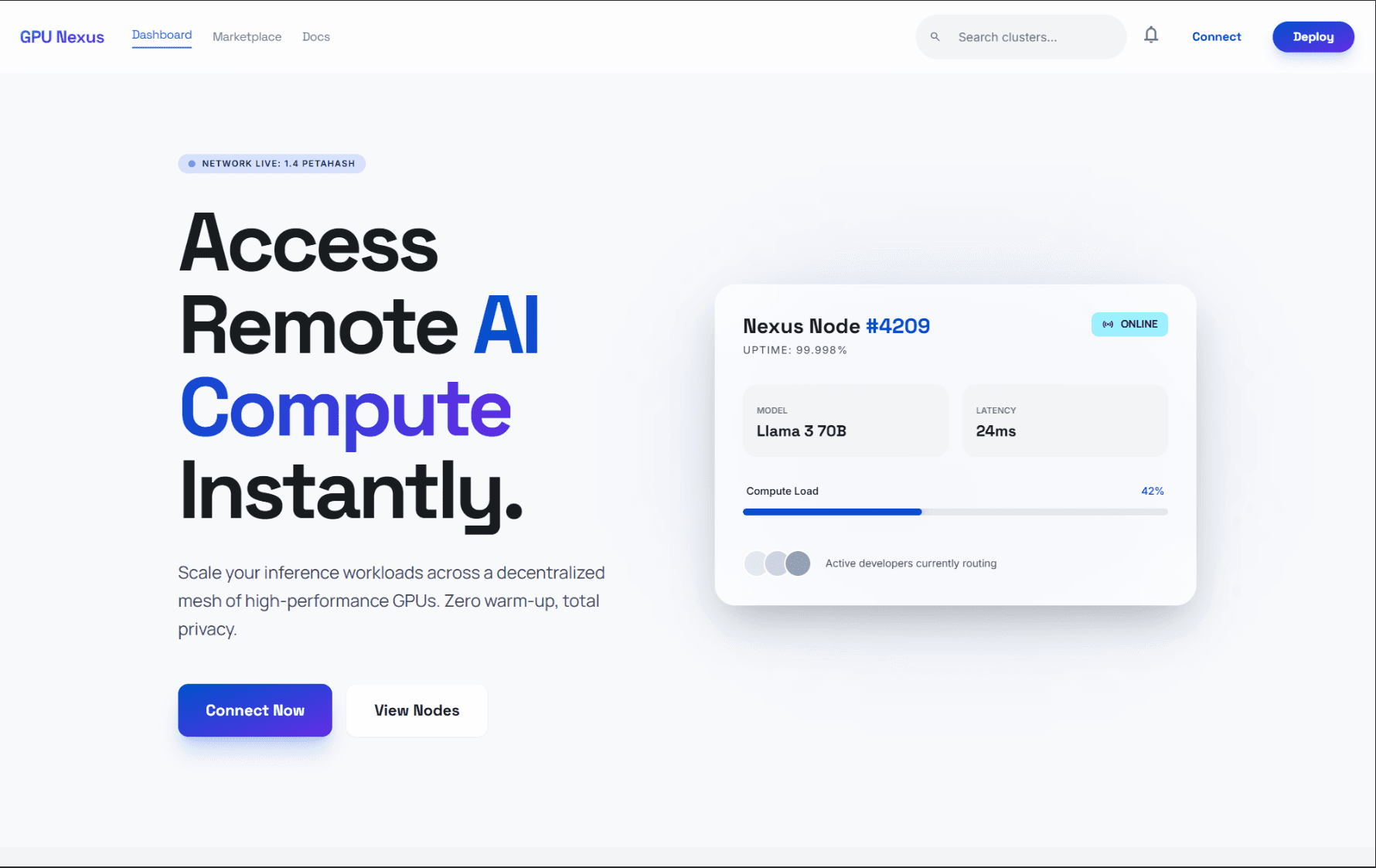
GPU Nexus: Airbnb for LLM Hosting
Summary
GPU Nexus is an MVP concept designed to test the feasibility of turning consumer-grade GPU hardware into rentable AI inference infrastructure. The initial proof of concept focuses on securely exposing a locally hosted Ollama-powered LLM through an authenticated web platform, allowing users to purchase credits, submit inference requests, and consume hosted model access remotely. Longer term, the concept could evolve into a marketplace where GPU owners list available compute, define token pricing, and monetise idle hardware through platform-managed billing.
The Challenge
The project explores both technical and commercial challenges involved in decentralised AI infrastructure. Building even a simple MVP requires solving authentication, usage metering, token accounting, infrastructure security, endpoint protection, and containerised model deployment. The wider strategic challenge is validating whether distributed consumer hardware could provide a viable lower-cost alternative to traditional hosted LLM APIs while remaining secure, scalable, and commercially practical.
Product Rationale
Infrastructure-first MVP
The scope deliberately focuses on proving technical feasibility before marketplace complexity, validating that secure remote inference and usage billing can function reliably in a single-host environment before attempting multi-provider expansion.
Security-led architecture
Given the risks of exposing AI endpoints publicly, the platform is designed around authenticated access, containerised deployment, request validation, and admin controls to minimise attack surface while exploring real-world AI infrastructure security concerns.
Commercial model validation
Credit and token systems are included at MVP stage because monetisation mechanics are core to validating whether the concept could support a viable marketplace model in production.
Marketplace expansion path
Although initially single-host, the architecture and product concept are designed with a future roadmap toward multi-host GPU listings, provider-set pricing, and platform-managed transaction fees.
Tech Stack
Key Decisions
Single-host before marketplace: Reduced initial complexity by focusing on one hosted GPU/LLM instance first, ensuring the core infrastructure model is proven before introducing distributed host management and marketplace mechanics.
Containerised LLM runtime: Using Docker-based Ollama deployment creates cleaner runtime isolation, improves deployment consistency, and supports safer infrastructure management when exposing inference services externally.
Integrated credit system: Usage metering and token balances are included in MVP because payment logic is fundamental to the platform’s commercial viability, not an optional enhancement.
Admin observability tooling: Logs, usage monitoring, and availability toggles are built into scope to support operational oversight and provide realistic platform-management controls.
Project Notes
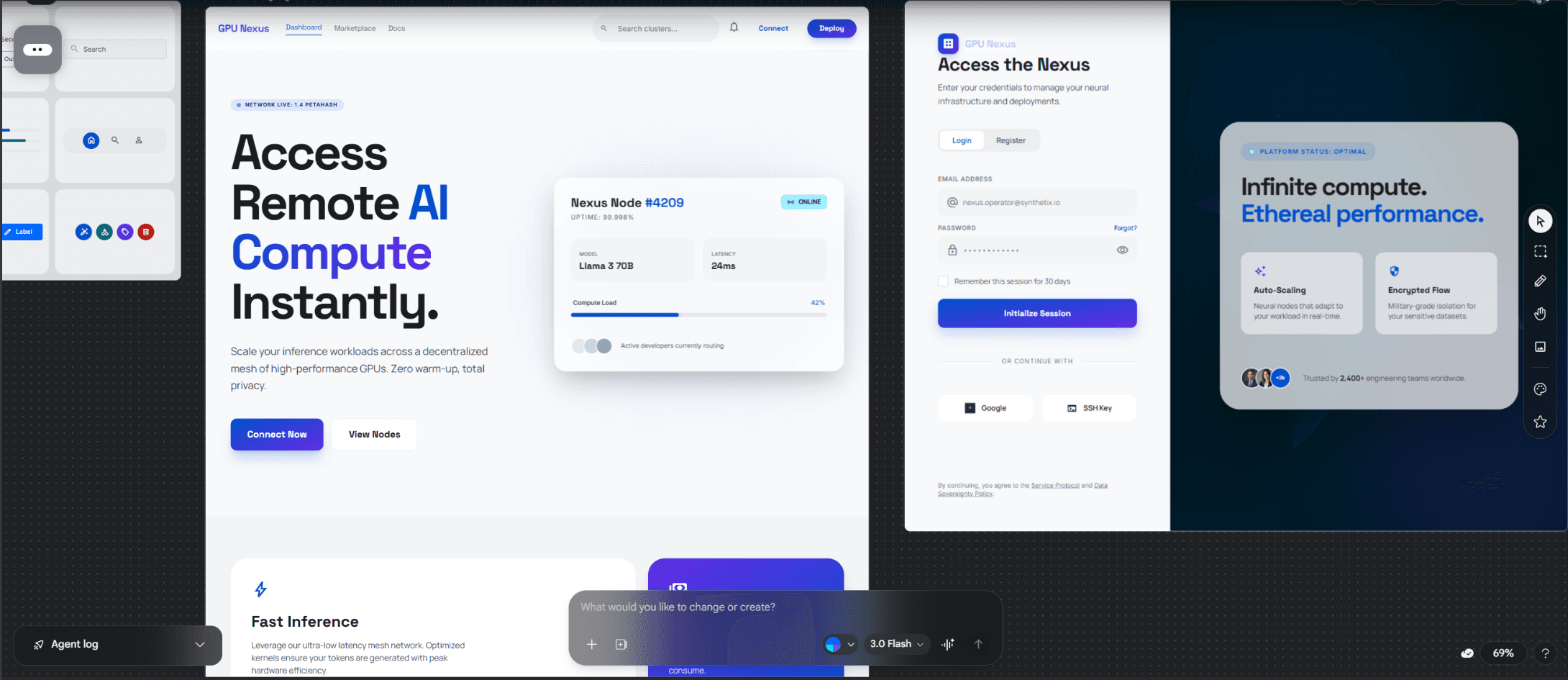
No two projects solve the same problem, so each case study emphasises different aspects of delivery depending on what was most relevant to the challenge. Supporting visuals and implementation details are included here to provide additional context behind the final outcome.
Visuals