Homebrew Log
Summary
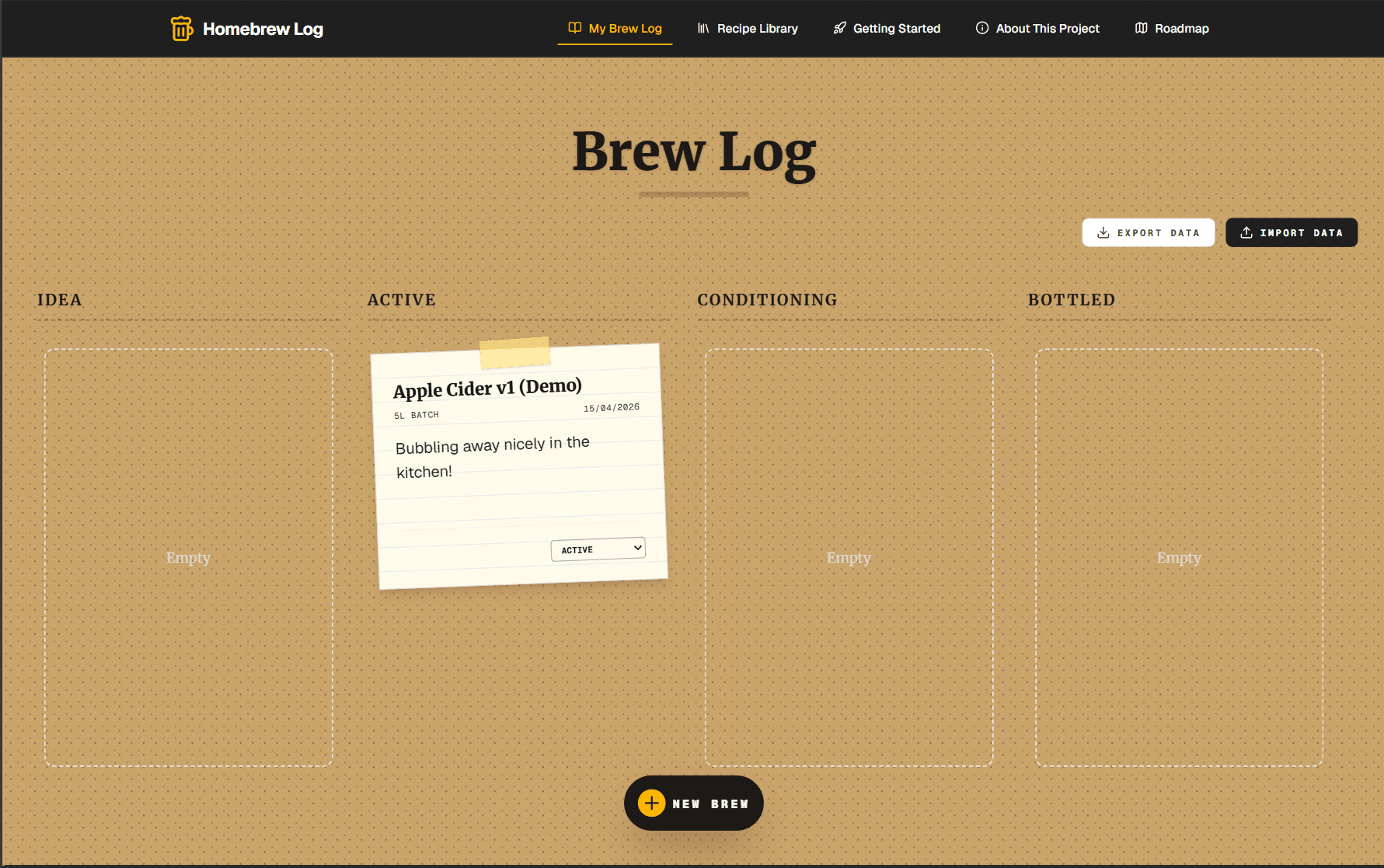
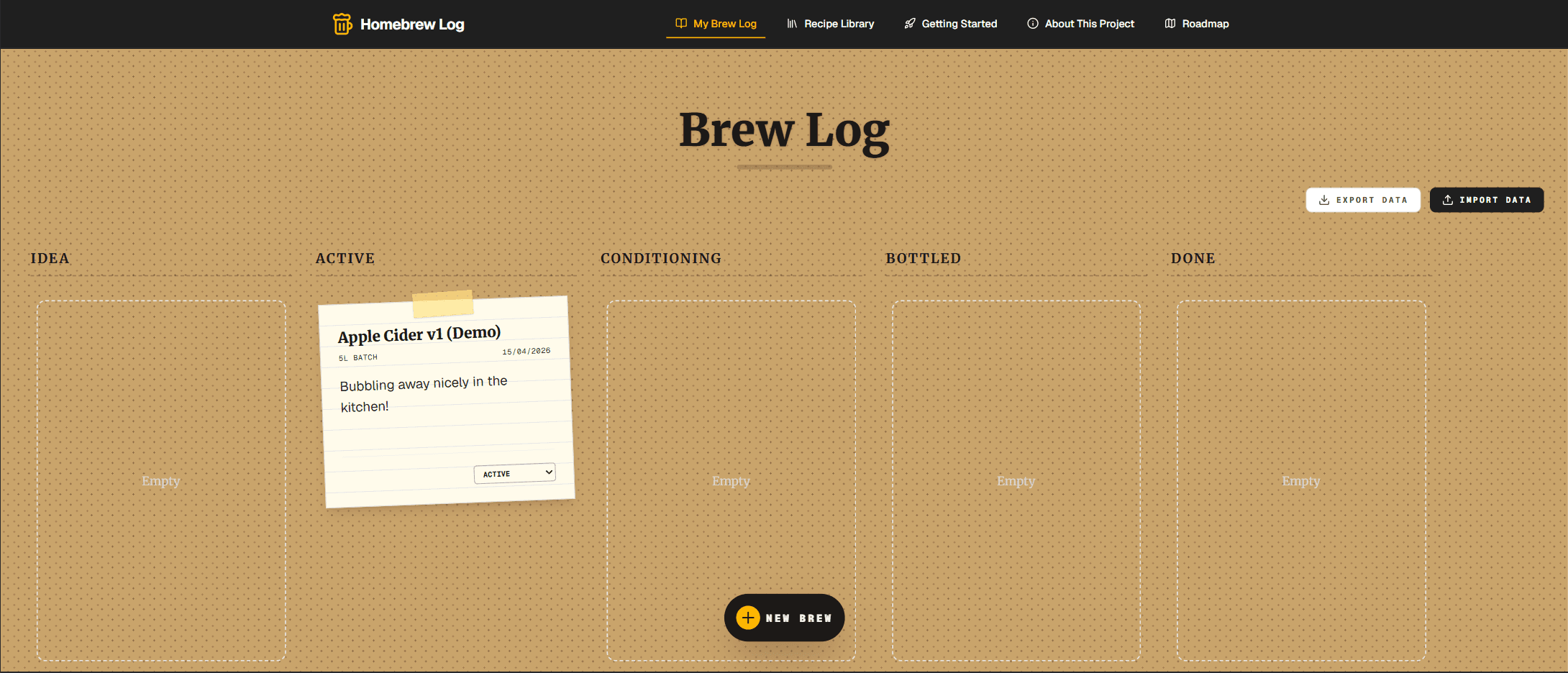
Homebrew Log is a workflow-focused brewing management tool built to help hobby brewers organise active fermentation projects in a kanban-style board while maintaining a reusable recipe library for long-term brewing records. The current MVP supports local browser storage, recipe archiving, JSON import/export, and recipe repopulation for repeat brews, with backend authentication and cloud syncing planned as the next development phase.
The Challenge
The challenge was to design a niche productivity tool that solves a genuine enthusiast problem while balancing practical end-user value against my own technical learning goals. The product needed to remain lightweight and intuitive for hobby users while also acting as a sandbox for learning modern web application architecture, deployment workflows, and backend integration planning.
Product Rationale
Workflow-first UI design
Structured the experience around a kanban board to reflect the natural staged progression of brewing, making status tracking intuitive for users managing multiple brews at once.
Offline-first MVP approach
Implemented local browser storage initially to validate the concept quickly before committing to backend infrastructure, reducing build complexity while preserving a clear upgrade path.
Tech Stack
Key Decisions
JSON export/import safeguard: Added manual JSON backup and restore functionality to reduce user risk before cloud persistence is introduced, ensuring recipes can be retained between devices or browser resets.
Backend staged for future release: Planned architecture with Supabase and Prisma in mind so authenticated accounts and cross-device syncing can be introduced without significant product restructuring.
Feature roadmap prioritisation: Future enhancements including AI recipe generation, guided recipe builders, statistics dashboards, and notification/reminder systems were deliberately deprioritised until the core logging workflow proved valuable.
Project Notes
No two projects solve the same problem, so each case study emphasises different aspects of delivery depending on what was most relevant to the challenge. Supporting visuals and implementation details are included here to provide additional context behind the final outcome.
Visuals